RWA Deposits Hit $7.4B as Broader DeFi Shrinks 15%
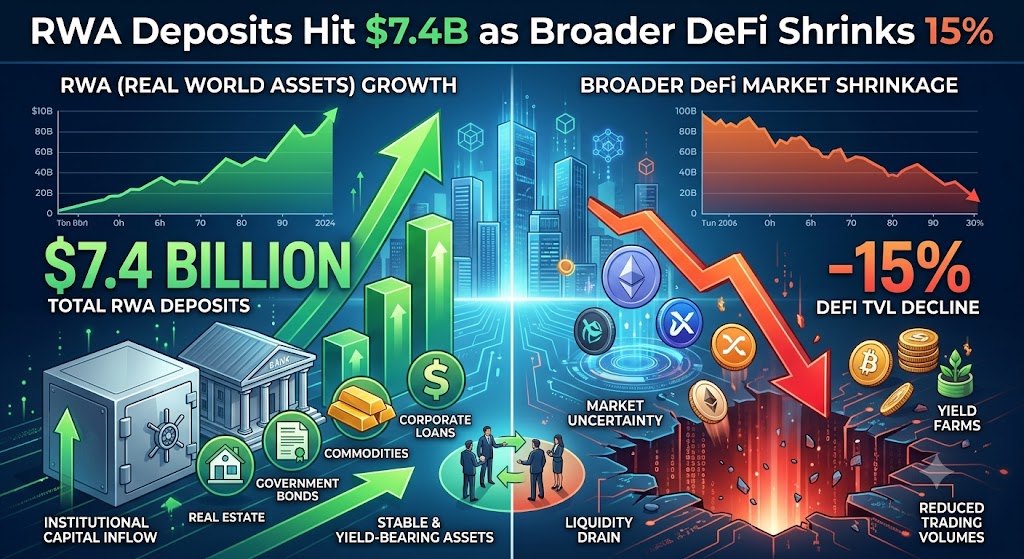
The digital asset ecosystem is undergoing a profound structural metamorphosis. For years, the lifeblood of on-chain capital has been Decentralized Finance (DeFi) protocols offering outsized yields driven by crypto-native leverage and trading demand. However, a watershed data release on August 6, 2026, has confirmed a massive institutional pivot. According to the latest analysis by CoinShares, deposits in tokenized Real-World Assets (RWAs) have tripled, surging to a historic $7.4 billion.
What makes this milestone particularly striking is the macroeconomic backdrop: while RWAs are experiencing explosive growth, the broader DeFi sector has simultaneously contracted by 15% in total value locked.
As a Senior Editor and Analyst at MyCoinWay, I view this sharp divergence not as a temporary anomaly, but as a permanent capital rotation. Institutional and sophisticated retail investors are actively re-evaluating risk, leading to a massive migration of liquidity that will fundamentally alter borrowing costs, funding rates, and stablecoin dynamics across the entire cryptocurrency market.
The Great Capital Rotation: From Algorithmic to Tangible Yield
To understand the severity of this 15% DeFi contraction, we must analyze the changing calculus of on-chain capital allocators. Historically, idle stablecoins (like USDC or USDT) were parked in algorithmic lending markets such as Aave or Compound to generate yield. These yields were inherently tied to crypto market volatility—when retail traders demanded leverage to buy Bitcoin or Ethereum, borrowing rates spiked, rewarding liquidity providers.
Today, the environment is completely different. The maturation of the tokenized RWA sector allows institutional whales to access the predictable, risk-adjusted yields of traditional finance (TradFi)—specifically U.S. Treasuries and corporate credit—without ever leaving the blockchain.
When a treasury desk can earn a stable, relatively risk-free yield of 4.5% to 5% through tokenized RWA protocols, the appetite for taking on the smart contract vulnerabilities and counterparty risks inherent in traditional DeFi lending plummets. The CoinShares data confirms that capital is rapidly fleeing the volatile, crypto-native yield farming strategies in favor of tangible, tokenized assets.
The Mechanics of the DeFi Liquidity Vacuum
This capital flight is not just an isolated trend; it acts as a mechanical vacuum for traditional DeFi liquidity, creating a ripple effect that touches every active trader and arbitrageur.
In automated lending markets, borrowing rates are determined algorithmically by the "utilization ratio"—the percentage of the liquidity pool that is currently being borrowed. As liquidity providers withdraw their stablecoins from these pools to deploy them into $7.4 billion worth of RWA contracts, the denominator (available capital) shrinks. Mechanically, this forces the utilization ratio up, triggering a sharp spike in DeFi borrowing rates.
For active traders who rely on borrowing stablecoins to leverage their directional positions, the cost of capital is becoming significantly more expensive. This dynamic directly spills over into the derivatives market. As the cost to borrow spot stablecoins increases, we expect perpetual futures funding rates to exhibit heightened volatility, potentially skewing heavily as traders search for the cheapest avenues for leverage.
P2P Markets and Stablecoin Friction
The rapid growth of the RWA sector is also reshaping how stablecoins flow through the peer-to-peer (P2P) markets. Tokenized RWAs are almost exclusively denominated and settled in major, fully collateralized stablecoins like USDC and, to a lesser extent, USDT.
As billions of dollars are locked into RWA smart contracts, the circulating supply of liquid stablecoins available for everyday P2P trading faces temporary bottlenecks. In regions with high localized fiat volatility, this supply constraint can lead to widening bid-ask spreads on P2P desks. Merchants are forced to price in the friction of sourcing sufficient liquidity, making fiat on-ramping slightly more expensive for end-users during periods of high RWA accumulation.
Furthermore, this trend solidifies the dominance of regulatory-compliant stablecoins. Institutional capital requires pristine collateral to bridge the gap between traditional securities and blockchain infrastructure. Consequently, we are witnessing a subtle but definitive premium attached to assets that seamlessly integrate with the RWA rails.
What to Track Next
Navigating a market where capital is rapidly rotating out of DeFi and into tokenized traditional assets requires a strict focus on on-chain metrics rather than speculative sentiment. Relying on outdated assumptions about DeFi yields will lead to costly miscalculations.
Here are the critical metrics you must track in the coming days:
- RWA vs. DeFi TVL Divergence: Continue monitoring the Total Value Locked (TVL) in top DeFi lending protocols versus RWA platforms. A sustained contraction in DeFi TVL indicates that borrowing costs for crypto-native leverage will remain structurally high.
- Perpetual Funding Rates: Watch the funding rate deltas across major tier-1 exchanges. If DeFi borrowing costs remain elevated due to the liquidity drain, traders will lean heavily on perpetual futures for leverage, leading to distorted and volatile funding rates.
- Stablecoin P2P Spreads: Keep an eye on local P2P desks for widening fiat-to-stablecoin spreads. A persistent drain of liquid stablecoins into RWA contracts could create localized supply shortages, inflating retail premiums.
- On-Chain Treasury Yields: Track the baseline yields offered by leading RWA treasury protocols. Any shifts in the U.S. Federal Reserve's interest rate policy will immediately reflect in these on-chain yields, dictating the pace of future capital rotation.
The tokenization of real-world assets is no longer a theoretical narrative; the $7.4 billion milestone reported by CoinShares proves it is a dominant market force. To successfully navigate this evolving liquidity landscape and protect your portfolio from rising capital costs, we highly recommend utilizing the MyCoinWay Market Pulse dashboard. By tracking real-time funding rate divergences and monitoring cross-exchange liquidity depth, you can adapt your execution strategies to the new realities of the RWA era.
Disclaimer: This article is for informational and analytical purposes only. It does not constitute financial, investment, or legal advice. Cryptocurrency markets are highly volatile, and structural shifts in liquidity can lead to unpredictable market behavior. Always conduct your own research before executing trades.
Sources:
- CoinShares Market Report: "Tokenized RWAs triple deposits to $7.4 billion as broader DeFi contracts 15%" (August 6, 2026).
- Market data tracking institutional capital flows across decentralized finance and RWA protocols.