The End of an Era: BitMEX Shuts Down After 11 Years. What It Means for Derivatives
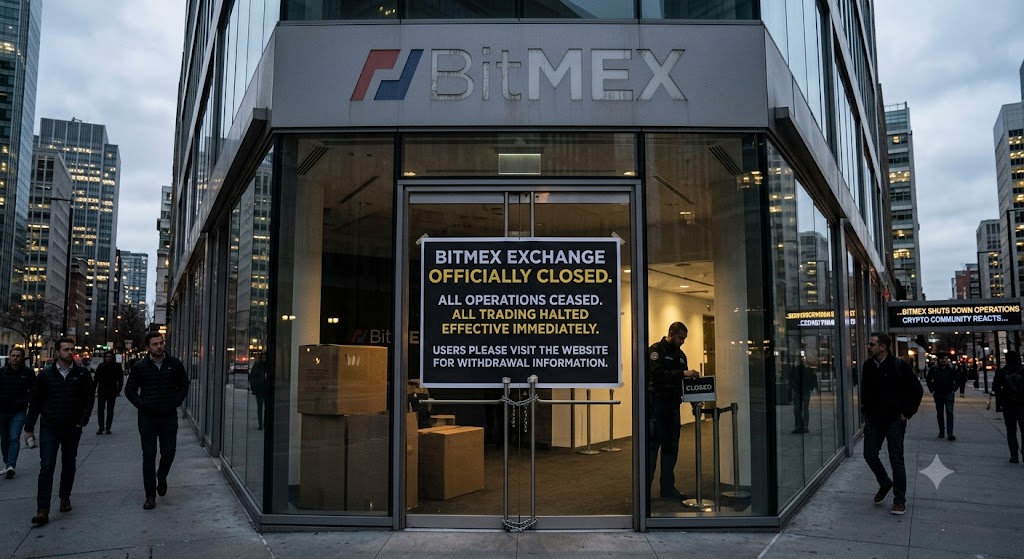
The digital asset landscape is undergoing a brutal stress test in 2026, and the latest casualty is a foundational pillar of the derivatives market. On Friday, July 24, 2026, HDR Global Trading Limited—the owner and operator of cryptocurrency exchange BitMEX—announced the platform will officially shut down after 11 years of operation. The exchange that single-handedly invented the perpetual swap contract in 2016 is closing its doors, signaling a profound shift in the institutional and retail trading environment.
As a Senior Editor and Analyst at MyCoinWay, I view the closure of BitMEX not merely as the end of an era, but as an impending mechanical shock to derivatives liquidity. The exchange currently holds approximately $900 million in assets. Over the next two months, this massive pool of capital—and the corresponding open interest—will be forcefully migrated to other platforms. Understanding the timeline and the structural implications of this capital flight is crucial for active market participants seeking to avoid forced liquidations and capitalize on funding rate imbalances.
The Timeline of the Shutdown
According to the official announcement, the sunset process for BitMEX is strictly phased. New user registrations were halted immediately upon the announcement on July 24. For existing users, the critical dates are rapidly approaching:
- August 25, 2026: This is the final day for standard buying and trading activities.
- August 26, 2026: The exchange will enter a strict reduce-only mode. Traders will only be permitted to shrink or close their existing open positions, effectively draining the platform's open interest.
- September 23, 2026: Any remaining open positions will be forcibly closed by the exchange's engine. Following this date, dormant accounts holding assets will face a monthly maintenance fee of $50 or 1%, whichever is greater.
This scheduled wind-down forces traders to make immediate strategic decisions regarding their collateral and active positions.
Market Impact: The Great Open Interest Migration
Why does the closure of a single exchange matter to the broader market, especially when Bitcoin is hovering around the $64,500 mark? The answer lies in the mechanics of the perpetual futures market. BitMEX may no longer be the dominant giant it was during its peak when it held $4.4 billion in assets, but its current $900 million holding is still a substantial footprint.
As we approach the August 26 reduce-only deadline, we will witness a phenomenon known as Open Interest (OI) migration. Traders holding massive leveraged positions on BitMEX must close them and re-establish equivalent positions on competing tier-1 exchanges. This dual action—closing on one book and aggressively opening on another—creates temporary but severe funding rate distortions.
For instance, if a large cohort of short sellers closes their positions on BitMEX, it generates localized buying pressure. Simultaneously, as they reopen those shorts on other exchanges, they exert downward pressure and skew the funding rates on those new platforms. Arbitrageurs who typically keep funding rates aligned across the global market will face elevated risks and widening spreads during this transition period.
Furthermore, the physical movement of $900 million in customer assets will inevitably lead to spikes in on-chain transaction volumes. While BitMEX boasts a pristine security record of zero funds lost to hacks in its 11-year history, the mass exodus of capital will strain network mempools, potentially elevating gas fees across major blockchains.
The Shift Toward Regulated Tier-1 Platforms
The strategic review of the business and the broader crypto industry that led to BitMEX's closure highlights a broader trend in the 2026 crypto landscape. The industry is rapidly consolidating around platforms that offer deep liquidity combined with proactive regulatory compliance. Traders are increasingly moving their capital to ecosystems that provide robust security, a wide array of trading pairs, and stability during market downturns.
For users currently migrating capital, relying on advanced infrastructure is paramount. Re-establishing complex hedging strategies requires platforms with deep order books to minimize slippage, especially when the broader market is already sensitive to macroeconomic shifts.
What to Track Next
The forced migration of BitMEX's user base will create localized turbulence. Active traders should adjust their risk models and monitor the following metrics:
- Funding Rate Divergences: Track the funding rates for perpetual swaps on major assets across different exchanges. Look for unusual spreads between platforms as large BitMEX positions are relocated.
- Inter-Exchange Spreads: Monitor spot price deviations across tier-1 exchanges. The sudden influx of fresh capital from former BitMEX users could create short-lived but highly profitable arbitrage opportunities.
- Open Interest Fluctuations: Pay close attention to global Open Interest leading up to the August 26 (reduce-only) and September 23 (force-close) deadlines. Sudden drops followed by immediate spikes elsewhere confirm large-scale position migrations.
- On-Chain Network Fees: Keep an eye on Bitcoin and Ethereum transaction fees. A rush of withdrawals from the BitMEX cold wallets could temporarily inflate transfer costs.
To effectively navigate this derivatives migration, visibility into real-time metrics is essential. Utilize the MyCoinWay Market Pulse dashboard to track live funding rates, compare cross-exchange liquidity depth, and monitor order book dynamics as the market absorbs this structural shift.
Disclaimer: This article is for informational and analytical purposes only. It does not constitute financial, investment, or legal advice. Cryptocurrency markets are highly volatile, and structural changes can lead to unpredictable price action. Always conduct your own research before making trading decisions.
Sources:
- Banking Dive: "BitMEX to shutter after 11 years" (July 27, 2026).